← Essays > Sitting out AI until it settles feels prudent. Don't.
Sitting out AI until it settles feels prudent. Don't.
It's the decision that quietly sinks you. 95% of corporate AI pilots produced nothing measurable — the winners didn't wait for a playbook, they moved in the fog and wrote one as they went.
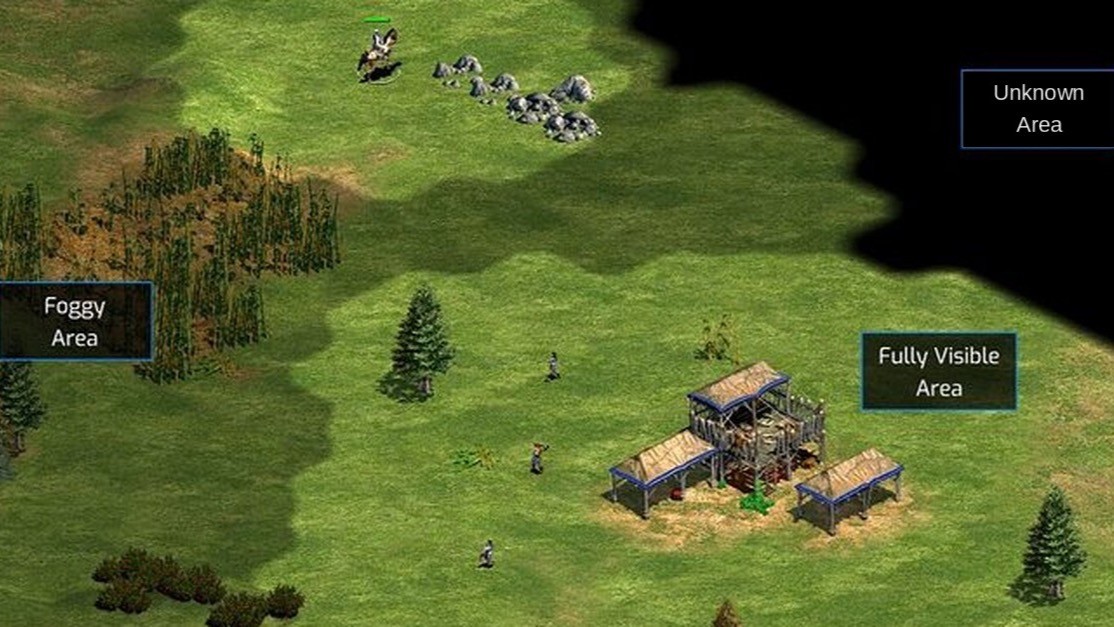
Last year, by MIT’s (disputed, but directionally correct) estimate, 95% of corporate AI pilots delivered no measurable impact on the business. Most of them didn’t fail loudly or make headlines, they just quietly failed to produce value, and worse still, any organizational learning. The natural reaction is to say — let’s sit it out, I don’t want to join the 95%. Don’t.
Back in 1986, Fred Brooks warned that no single tool ever delivers a tenfold leap in productivity, because the hard part of the work was never the tool, it was the people. AI is the most powerful tool most of us have ever used, and Brooks is still right.
A lot of companies are waiting for the perfect playbook, or they created one that they’re now following blind — when the environment has shifted. The playbook isn’t here yet because this kind of problem doesn’t have one, and it doesn’t have one because you only work it out by doing it, so the patterns show up after you move and not before. Anyone who’s played a strategy game knows the feeling: fog of war. You don’t get the whole map at the start, you scout, you push forward, the ground lights up a few squares at a time, and what’s lit keeps changing on you. The teams pulling real value out of AI didn’t plan their way there, they started moving in the fog and kept adjusting as they went.
The thing you’re adjusting to won’t hold still. One quarter the problem is that nobody can write a decent prompt, and the next quarter the prompts are fine but nobody can judge whether the output is any good, and the quarter after that nobody trusts the system enough to put it in front of a customer. You solve one bottleneck and the next one appears.
Assume whatever plan you make will be stale in a quarter, because the fog shifts and the blocker moves and the plan that was right in Q1 is brittle by Q2. The people who will win aren’t the ones with the best plan, they’re the ones willing to throw last quarter’s away, and head into the fog anew.
So move while it’s still foggy. Whatever your role, three things help.
-
Start inside real work. One actual task your team does every week, not a sandbox, because MIT was blunt about this: the wins came from tools that fit a real workflow, and the demos went nowhere. In my experience the best places for value aren’t jaw-dropping executive demo type things — they’re the steak and potatoes back office processes that everyone ignores because nothing screams broken.
-
Name the single biggest thing blocking you, and fix that one. Then go looking for the next, because there will always be a next.
-
Focus on learning. Empower your people and encourage them (and yourself) to experiment, learn, and share with one another. Bring in folks with expertise (might be thin these early days but someone with a few months head start can still be a learning accelerator). Include the value of learning in your ROI and business case.
The canon for this doesn’t exist yet, the best practices and the named patterns haven’t been written, because the people who will write them are still out in the fog right now, taking notes, and there’s no good reason that can’t be you.
I’ve been reading backward, because the hottest take on AI ages like milk while the old ideas tend to rhyme with right now. Three I came back to recently:
- “No Silver Bullet,” Fred Brooks (1986). The essay I opened with. Free full text.
- “The Goal,” Eliyahu Goldratt (1984). A novel about a struggling factory, and still the clearest thing ever written on bottlenecks — it’s the second rule above told as a story. Here’s the graphic-novel version, if you’d rather read it in pictures.
- “A Leader’s Framework for Decision Making,” Snowden and Boone (HBR, 2007). The source of the fog idea, and a guide to acting when best practices don’t exist yet. The HBR original is paywalled, so here’s Snowden’s own free walkthrough of the framework.
Not one of them mentions AI.
So don’t wait. Say out loud the single thing keeping AI from working in your corner of the business, and try to say it in one sentence, and if you can’t get it that short, you’ve just found the thing to work on first.
Source: Now infamous “The GenAI Divide: State of AI in Business 2025,” MIT Project NANDA (2025): https://mlq.ai/media/quarterly_decks/v0.1_State_of_AI_in_Business_2025_Report.pdf